Friday, November 11, 2022

My red shoes


Dorothy had her ruby slippers. Finally, I have my red shoes, and I am many decades older than she was.

Buying shoes has always been a challenge for me. Like the rest of my body, my feet are long and narrow, requiring 12A shoes since I was a teen-ager. Many say that the unusual thing, given my height, is that I don’t need size 15 or more. Count me lucky.

Finding the narrow width was always the problem. Stores overflow with men’s shoes marked wide and extra wide. Sure, you can buy men’s A-width shoes if you are willing and able search hard for them, not be fussy about style, and pay a premium price. Sometimes I did pay that price.

But many times, especially for athletic shoes, I made do with shoes too wide for my feet. Tying them tight created folds of leather or fabric just in front of the laces. They rarely felt really comfortable no matter how hard I tried to pretend at first that they’ll be okay, thank you.

About 20 years ago I discovered that New Balance offered narrow shoes, and I paid the price for them. As with many things, it was worth it. There’s little that’s harder on one’s state of mind than an ill-fitting pair of shoes. Hurting feet can raise hell with the head.

Shoes suitable for riding a bike became an interest of mine when I bought my Specialized Cross Trail in 2015. I pretended I was young and agile enough to buy clip on pedals and shoes. In this arrangement, the shoes firmly attach to the pedals. Your shoes cannot slip off the pedals, nor can you lift them from the pedals. The advantage is that you can benefit from lift on the way back up, pulling the pedals up with a force somewhat less than the force you get from pushing them down, but nevertheless significant.

You get out of clip-on pedals by sharply kicking your heel outward away from your bike. This releases the shoe from the pedal so you can put your feet on the ground and keep yourself upright when you stop. It’s a tricky maneuver that takes some practice. It also requires an extra second or two before you do stop.

The shoes I bought for this two-wheeled, self-powered, integrated man/machine were black with red accents.

There are many stories of cyclists meeting the pavement because they had not freed at least one foot fast enough. Fortunately, that never happened to me. I am an extremely cautious rider. I anticipate problems like most people anticipate food.

But as the pain in my arthritic knees got worse, I lost confidence that I could kick my shoes free from the pedals in an emergency. So, a couple of years ago I got plain old flat pedals and returned to riding with athletic shoes. It was kind of come-down, but I was less likely to fall down.

When I bought a new Jamis step-through bike early this summer (another concession to age’s advance), I decided I’d buy some shoes primarily for riding. Don’t ask me why. It seemed appropriate. But I did not want to spend too much on them, so Maxine and I went to a shoe warehouse sort of place rather than to a New Balance store to see what I could find.

I found all-red, almost ruby-red, Pumas. Their black laces nearly wrap around the entire upper part of the shoe. Very cool.

They weren’t the first shoes I’d found that day that might have worked for me, and their fit is not perfect. But they were relatively inexpensive, and felt good on my feet. Perfect for cycling, I told myself and Maxine.

But did I dare? Red shoes on feet the age of mine? I liked the thought of it. Just a little bit daring, outside my retirement community’s norm of clunky white walking shoes. Maxine assured me they were great. I snapped a picture, and texted it to my daughters, and they said go for it. So, with the unneeded but appreciated assurances of those who could afford to be honest with me, I bought them.

Since getting my red shoes, I’ve noticed red on the feet of other men, all of whom are decades younger than I. Wearing red Pumas fools no one about my years, except maybe myself. I imagine they make my aching knees feel a little stronger. Plus, they work well on my bike, as I’d hoped. And they are almost as much fun as that bike  whether riding it or walking the pathways of our peaceful neighborhood.

Wednesday, November 2, 2022

On the existence of high winds

From time to time when I’ve driven the great stretches of lonely highway in America’s Southwest, I have been confronted by an official road sign advising me that, “High Winds May Exist.”

I am sure the sign is intended to warn me that, without warning, a gust of wind might blow my car where I do not want it to go, or even overturn it altogether. Semis and recreational vehicles are particularly vulnerable to such winds, but regular automobiles are, too, if the wind is really high.

I am never sure what I am supposed to do with the sign’s statement while managing my car at a 75 m.p.h. clip. Instead of making me more alert to what’s going on around me, the notice that “High Winds May Exist” sends me into a philosophical rabbit warren.

For one thing, high winds do exist. Yes, the philosopher will demand definitions of “high” and “wind” and “exist” in order to fully trust the truth claim of the assertion. But common language usage leaves no doubt that high winds certainly do exist. Just ask anyone who’s been through a hurricane.

But the statement painted in plain letters on that isolated sign tends to sow a tiny seed of doubt: if high winds may exist, one must consider the possibility that they may not exist. Despite overwhelming evidence to the contrary, and using the right tricks of the philosopher’s trade, it is possible to argue that high winds do not exit.

After all, who has ever seen the wind, any wind, low or high? You can see evidence of what seems to be a high wind’s existence, but that doesn’t prove that high winds exist, however you define existence. You might conclude there’s no such thing as a high wind at all.

Of course, my existential concern when I see that sign is supposed to be whether a high wind exists or is about to exist right where my car is. It’s not the theoretical existence of high winds that should concern me, but the actual presence of high winds on this road at this moment. I am, I believe, being advised to be very alert. But it’s hard to think about the here and now when my mind is adrift in a metaphysical whirlwind.

Thus, something we all agree to be true is challenged by a carefully contrived statement that sows doubt without directly confronting the agreed-upon truth. It’s easy to distract people from the realities around or near them just by asking a question or suggesting an alternative to something they, for good reason, take for granted. Politicians do it all the time, and the nation slides into a metaphysical warren from which there is no escape for anyone but a rabbit.

Friday, October 7, 2022

My witness in this election

I do not expect that my views on the upcoming election will sway any voters one way or the other, but I still feel called to witness to what I know:

I know that Joe Biden is our legitimately-elected president. I know that the evidence is all on my side in this regard, and that Mr. Trump’s party’s embrace of his “Big Lie” is a direct threat to our democracy. I know those who control today’s Republican Party would lead us to one-party, authoritarian rule, buttressed by an extremely distorted version of Christianity. 

I know that talk of “Civil War” comes from people who fear they cannot get what they want through the legitimate processes of our democracy because what they want is not the will of the majority of our people.

I know that white supremacists should have no seats in our halls of government 

I know that the pursuit of truth about such matters as race, history, sexuality, and science, must not be constrained by politics and political power.

I know that fear—of others or of one another—in no way to make a nation “great."

I know that Liz Cheney is right when she says, “If you care about democracy and you care about the survival of our republic, then you need to understand—we all have to understand—that we cannot give people power who have told us that they will not honor elections

Tuesday, September 27, 2022

The light must not go out

One must say Yes to life and embrace it whenever it is found - and it is found in terrible places; nevertheless, there it is. For nothing is fixed, forever and forever and forever, it is not fixed; the earth is always shifting, the light is always changing, the sea does not cease to grind down rock. Generations do not cease to be born, and we are responsible to them because we are the only witnesses they have.

The sea rises, the light fails, lovers cling to each other, and children cling to us. The moment we cease to hold each other, the moment we break faith with one another, the sea engulfs us and the light goes out.

~James Baldwin: The Price of the Ticket

Wednesday, September 21, 2022

Summer's end--the shadows lengthen

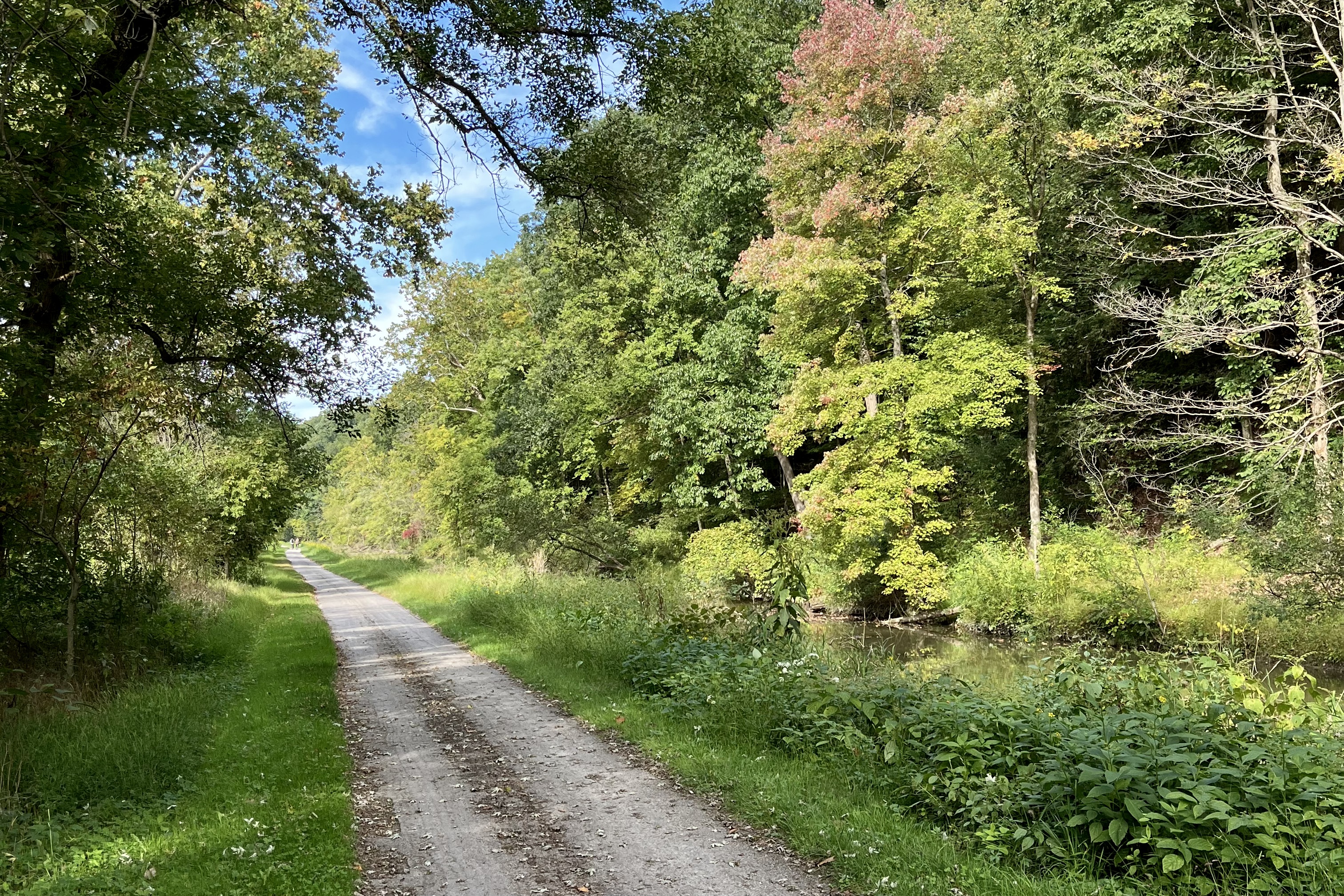
 Late this afternoon along the Ohio and Erie Canal Towpath in Cuyahoga Valley National Park.

My first bike ride there in over a year, and it was a beauty!


Tuesday, September 20, 2022

The queen is dead. What next?

Yesterday we buried Queen Elizabeth II, Sovereign of Great Britain and Northern Ireland, Head of the British Commonwealth of Nations, Defender of the Faith, etc., etc., etc…

I say we buried Elizabeth II because she represents the end of our era, of the era of those of us who born just before and during World War II.


What a grand era it has been for us! It began with our side vanquishing the Nazi threat to humanity, and the beginning of a time of great prosperity for millions around the globe. Our side of the world—the western side—created the United Nations largely in our image. We forced the Soviet Union into bankruptcy and dismantling itself, making it clear to all the democracy/free enterprise was the best and most humane of all governments. Increasing awareness of other peoples and other cultures enriched our lives, and we even came to new understandings of pains and the aspirations of the varieties of people within our own borders. Some of us even offered apologies for the abuses those before us and we ourselves visited upon others.


And the Queen smiled over it all, her benign countenance blessing all. Even her beloved England, now picking up whatever pieces of its remaining empire that it might yet hang on to, put on a display of power and pride for her funeral as only the Brits can. For a few hours you’d have thought Britain still ruled the waves and the world.


But of course, things have changed. They have been changing for decades. The first hints came in the 1960s. In that decade distrust of institutions seemed overwhelming, but time proved those years to be only mildly unsettling compared to what was to come. While Elizabeth II smiled, the world order created by the west fragmented, Vladimir Putin became the 21st century’s Joseph Stalin, China grew into the new Communist threat, American democracy was assaulted by our own citizens, and the distance between wealth and poverty increased everywhere. Dictators were encouraged; democracy was dismantled; free enterprise was costly for everyone except the wealthiest. People stared into screens from the security of their own homes, and civic involvement has all but disappeared. Pop culture celebrated the crude, celebrities with no discernible talent got rich as “inflencers,” and everything became subservient to the whims and wiles of the individual.


Not to mention that the natural world, having had enough our abuse, struck back at us with increasing ferocity.


But the Queen smiles on us no more, except in pictures. Her “rule”—backed up by no real political power—her rule will fade as we pick at and fight among ourselves for our last fragments of a world forever lost.


The Queen is dead. What sort of humanity will we become now that she is gone?

Monday, September 12, 2022

A line is not a border is not a line…

A long-ago memory: I said something to my dad about crossing the “border” between Iowa and a neighboring state (probably either Illinois or Minnesota), and he corrected me. “It’s a state line, not a border,” he said.

I am not sure what I thought that meant when he said it some 70 years ago. But I have often thought of it recently with all the talk of the rights and powers of the several states vs. the rights and power of our federal government.


A lot of that talk goes back to the 19th century, when our nation’s divisions over slavery led southern states to emphasize the “sovereignty” of each state over what it considered its own internal business. That talk culminated in the Civil War. It never went away, and enjoyed a powerful revival in the mid-twentieth century in the desegregation struggles.


Is the “United States” in fact fifty sovereign states separated by borders that need defending in order to protect each state’s own values and interests?


The issue is complex, and I am no expert. “Line” is probably not strong enough to describe how the states relate to one another within our union. Certainly not “line in the sand,” subject to being moved or obliterated in the breeze. Isolated states merely in the guise of being “United States” were not key to winning two world wars, which may have influenced my father’s thinking when he said that to me.


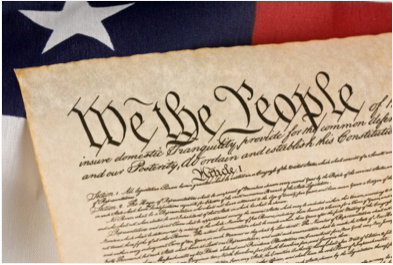
And “states’ rights?” How do “states’ rights” and individual rights as American citizens interface? If a state’s rights can take away or deny an individual’s rights, then what sense does it make to speak of being citizens of “United States?”


I don’t buy all the revived talk of the unassailable nature of “states’ rights.” I know there’s constitutional basis for some such talk, but most of what I am hearing sounds like a cover-up for denying human rights, as it always has been.